Runic Games is running a Torchlight 2 stress test this weekend and I was lucky enough to get an invite. I already have TL2 pre-ordered, mind you. I’ve been waiting for this game with the same kind of anticipation many of my friends have been waiting for Diablo 3.
The two games share an awful lot of similarities. Both are action-RPGs that are focused on looting and leveling and both are pretty casual-friendly. Both are mouse driven and played from a 3/4 view 3rd person perspective.
The big difference? Torchlight 2 is the sequel to Diablo 2 and Diablo 3 isn’t. 🙂
My biggest disappointment with Diablo 3 is that there’re no strategic decisions to be made when it comes to growing your character. For a given class, everyone unlocks the same skills/runes at the same level. There are certainly tactical decisions to be made (Which skill/rune combo is right for this area of the dungeon I’m in?) but everything is easily reversible and at a given level everyone has the exact same skills to pick from (disclaimer: I’m still in Act 1 so maybe this changes).
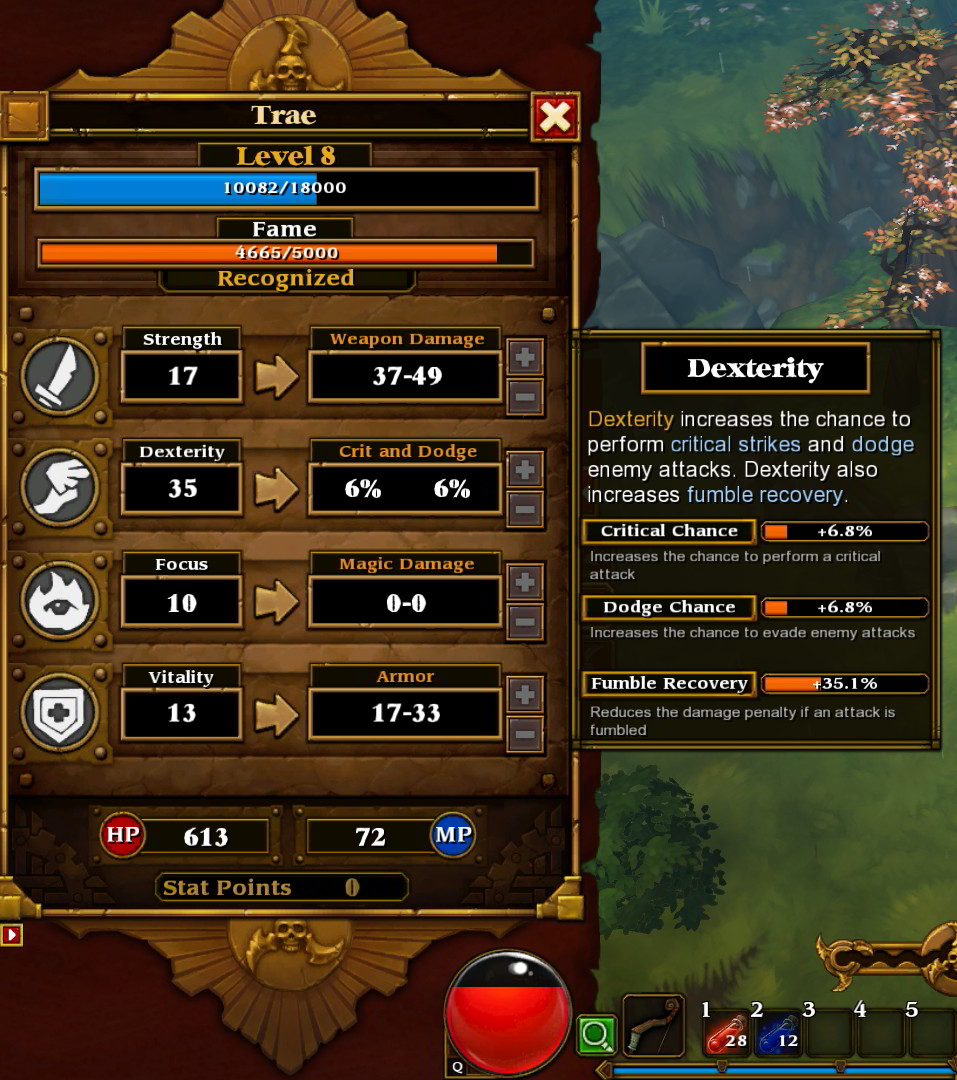 Compare this to Torchlight 2 where every time you level you get 5 points to put into stats. Here’s a strategic decision: do you want to focus on one stat or spread things out? If one stat, which one? With the dude I’ve been leveling I’ve been putting a ton of points into Dexterity and relying on increased critical hits for causing damage, and my dodge stat for avoiding damage. Is this smart? Not sure yet, but it’s the strategy I’m using with this character. Later I could roll the same class and put a ton of points into strength and have a different kind of character.
Diablo 3 also has stat increases each level but the game decides what they are and most players probably don’t even notice them. Fans of the game like that they’ve got one less thing to worry about and tell me that they’d probably spend the points the way the game is auto-spending them anyway, so it’s just more convenient this way. That may be true for your first character in a given class but I think Torchlight 2 will have a lot more replayability.
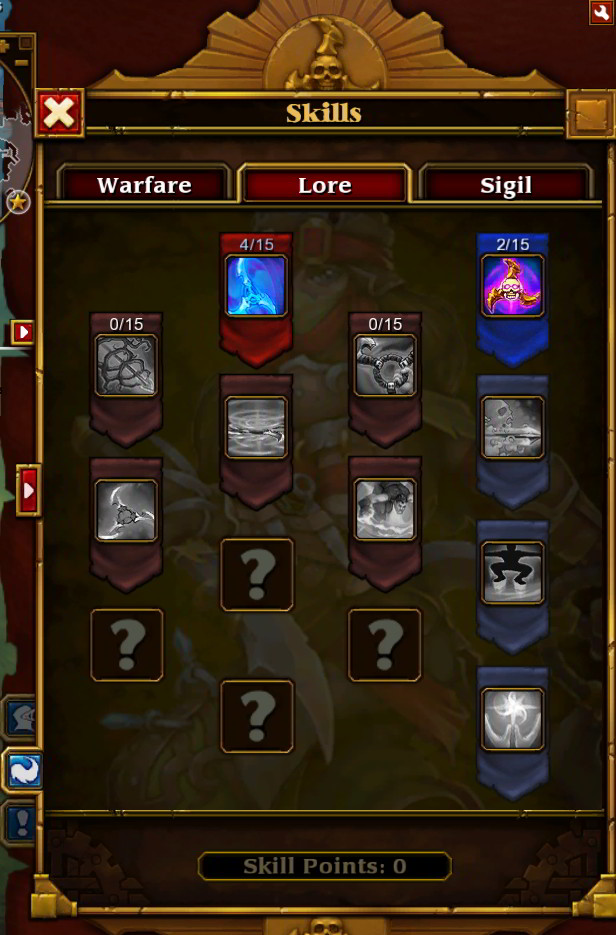 But it isn’t just stats, there are skills too. Each level you also get a skill point, and each class has 3 skill trees. You can specialize in one tree or spread things out. You can also craft a character that fits your playstyle. Spend a lot of points in passive skills and your actual playing experience will be fairly simple. Or spend point unlocking a ton of active skills and your fingers will be dancing on the keyboard hitting different skills constantly. It’s all up to you.
Diablo 3 has some of this on a tactical level, but in Torchlight 2 you won’t be able to get everything on a single character. That’s going to encourage multiple play-throughs with variants of the same class and should help keep the game interesting long after folks have squeezed all the goodness out of D3. (Let’s face it, this style of game is all about the journey and leveling up characters after you’ve experienced the story once.)
It all boils down to more choice. Diablo 3 is about cool loot and tactical choices, while Torchlight 2 is about cool loot, tactical choices and strategic character building. Torchlight 2 also gives you two sets of weapon slots and lets you toggle between them, which makes combat more interesting. Add in the pet you have right from level 1; a companion who’ll run back to town to sell excess loot and buy you some more pots, as well as helping out in battle. Oh yeah, and you can fish for treats that’ll turn your pet into some other creature for a while.
I’ve been playing an Outlander, a class described as “a gunslinger with some secret weapons!” He was ‘born’ with a pair of pistols but soon enough I found a nice bow and I was playing him as an archer for a while. But then I found a nice magical ‘claw’ weapon, so now when things get into melee range I switch over to a pair of claw weapons. Plus he has a ‘glaive’ that he can throw and that bounces around hitting more than one enemy (that’s his first magic spell) and I’ve been leveling that up. He also has a kind of rage mechanic where the more things he kills quickly the more powerful he becomes, and I’ve been spending points on a passive skill that slows down the ‘draining’ of rage between fights. Basically I’ve ignored his ‘gunslinger’ side and he’s still very playable. I could roll a new Outlander and put all his points into ranged attacks and that would be a very different character.
Now, let’s give Diablo 3 its due: in terms of sheer spectacle, D3 beats Torchlight 2 hands down. The artwork is better, the lore is better, the NPCs are more interesting, the sound design is better. And D3 has the ‘bonus’ that everyone and his brother is playing, so if you’re looking for a multi-player game, someone is probably ready to join you.
Torchlight 2 just has more interesting gameplay, more replayability, and costs $20 instead of $60 and probably runs better on older computers. If you find yourself enjoying Diablo 3 gameplay but are hankering for something a bit more meaty to sink your teeth into, then consider dropping a Jackson on Torchlight 2 when it comes out in (I’m guessing) a month or two.
Here’s a gameplay video. This isn’t an epic fight or anything; I just fired up a game and started recording. It’s a little hard to make out but about a minute in I switch from bow to claws, and later back again, and you can see the blue glaive flying around now and then. The wolf is my pet; her health is at the top left corner of the screen. Middle center bottom of the screen is my rage meter.