The Courage to Write

The Courage to WriteNaNoWriMo is right around the corner and I’ve been wrestling with the question of whether or not I should participate this year. Finishing up Ralph Keyes’ The Courage to Write seemed like a good way to help me to decide.

The Courage to Write isn’t a “how-to” book. It’s more of a “why-to” or even more accurately, a “why-not-to” (and how to silence those objections) book. It talks a lot about why people who think they want to write, don’t. And as the title would suggest, fear is one of the biggest reasons (according to Keyes) that people don’t write, and overcoming that fear is a struggle for many writers. Keyes illustrates his points with many anecdotes that he has gathered both from writers we’ve all heard of and those we haven’t and never will (since they gave up the fight). More specifically, one of the greatest fears that a writer faces is that of making a fool of him or herself. Keyes talks about how writers expose themselves when they write, and how intimidating that can be.

This is a great read for struggling writers. It’s like a shot of moral support in book form. It won’t make you a better writer, but it might keep you writing, and that will eventually make you a better writer. The tone is very informal, like having a comforting chat with the author. This isn’t one that you finish and stick on a high bookshelf somewhere. This is the kind of book you want to keep close at hand for when you need some inspiration or the comfort of a friendly voice reassuring you that you aren’t alone in the doubts that are plaguing you. 5/5 for writers, and might even be of interest for serious readers, too.

Darwin among the Machines

Darwin Among the MachinesWow, I finished it. I feel like a great weight has been lifted from my shoulders.

I don’t normally do this, but before writing this review I checked the rating for George B Dyson’s Darwin among the Machines at Amazon. I’d heard great things about the book and wanted to see if I was just out on my own with my opinion of it. Amazon rating: 4 stars. So yeah, I pretty much am.

But I’m calling the Emperor clause. I believe he has no clothes. The book does have an interesting theme, but that theme is more “a history of computing” than anything to do with “the evolution of global intelligence” (the subtitle of the book). But the basic problem is that while Dyson might be a Very Smart Guy, he doesn’t know how to write and communicate clearly. Seriously, this book was a slog… I read it in 3-4 page chunks (started it back in June) because the style was so awkward it made my head hurt. I’d often have to read a passage several times to figure out what point he was trying to make. Also, Dyson uses a *lot* of quotes. There’re 30 pages of footnotes for the 230 pages text and the quotes tend towards lengthy passages. I’m going to estimate that 70% of the book is quotations. Why is that a problem? Because it means the there’s no unified ‘voice’ to the book. A theory voiced by an individual from the 16th century is going to read very differently from one voiced by a modern individual (not to mention the changes in language over those years). So you’ve constantly got to ‘switch gears’ in your mind as you read.

Here’s a passage, more or less at random:

When the Spanish armada entered the English Channel in July 1588, a network of fire beacons raised the alarm, cradling the newborn Thomas Hobbes with fear. The invention of the telescope in the early seventeenth century extended the distance between relay stations and allowed more complex symbols to be distinguished. The feasibility of a “method of discoursing at a Distance, not by Sound, but by Sight” was addressed by Robert Hooke in a lecture “Shewing a Way how to communicate one’s Mind at great Distances,” delivered to the Royal Society on 21 May 1684. Having advanced the optical instruments of his day, Hooke showed that “’tis possible to convey Intelligence from any one high and eminent Place, to any other that lies in Sight of it, tho’ 30 or 40 Miles distant, in as short a Time almost, as a Man can write what he would have sent, and as suddenly to receive an Answer as he that receives it hath a Mind to return it… Nay, by the Help of three, four or more such eminent Places, visible to each other… ’tis possible to convey Intelligence, almost in a Moment, to twice, thrice, or more Times that Distance, with as great a Certainty as by Writing.”

Robert Hooke (1635-1703) was a brilliant but difficult character whose “temper was Melancholy, Mistrustful and Jealous, which more increas’d upon him with his Years.” Possessed of “indefatigable Genius,” his creative output was astounding, despite ill humor and ill health. “He is of prodigious inventive head,” reported contemporary John Aubrey, adding that “now when I have sayd his Inventive faculty is so great, you cannot imagine his Memory to be excellent, for they are like two Bucketts, as one goes up, the other goes downe. He is certainly the greatest Mechanick this day in the world.”

– Darwin Among the Machines by George B. Dyson, pp 133-134

Again, I just pretty much randomly opened the book and grabbed a passage. You can see the proportion between Dyson’s own words and historic quotations, and you perhaps will wonder what Hooke’s character really has to do with a global intelligence developing like an Orson Scott Card character in the spaces between networked computers. I know I did.

That said…it *is* an interesting book from a historical perspective. I rather wish Dyson had just written a “history of computers and technology” and forgotten about the intelligence aspect. As it stands, I found the book difficult to read and rather unfocused. I never really got the point he was apparently trying to make, in any but the vaguest of ways. He certainly didn’t provide any evidence that would convince me there’s some kind of ‘machine intelligence’ percolating along at the speed of light in our networks. And I *think* that was the point he was trying to make.

2.5/5 stars from me.

Madeleine L’Engle, 1918-2007

When I think back on it, Madeleine L’Engle’s A Wrinkle in Time probably was the one book the set me on this life-long path of loving speculative fiction. Even if I didn’t call it that at the time. She and H.G. Wells. And from my love of sci-fi and fantasy came my love of computers and gaming, both of which very strongly shaped the path my life has taken.

Madeleine L’Engle died this week, of natural causes. She was 88. Her books will live on, hopefully forever.

Her website holds a list of her books.

CNN reports on her death. A good read for the impatient and the curious.

The NY Times reports on her life in Madeleine L’Engle, Children’s Writer, Is Dead. This is a much better read for anyone who loved her books.

Dead Witch Walking

Dead Witch WalkingEver gotten into that awkward situation where a friend lends you a book and urges you to read it, and you look at the cover with dismay, just *knowing* you’re going to hate it but not wanting to be rude? Yeah, that’s how Kim Harrison’s Dead Witch Walking ended up on my Now Reading list.

And guess what? The old saw is true. You *can’t* judge a book by its cover, because this one turned out to be quite an enjoyable read. Great literature? No, but not everything has to be, does it? Harrison mixes two parts fantasy with 1 part detective fiction here, adds in a dash of alternate history, and the result is just good fun.

Rachel Morgan is a witch in a world very similar to ours, except in her world, a bio-engineered plague wiped out a good chunk of humanity. When it did, the vampires, werewolves, witches, pixies and fairies (Inderlanders, they call themselves) came through unscathed. Seems they’ve always been here, hiding in plain sight often enough, but they’ve kept a very low profile. When the plague (or The Turn, as they call it) hit and the humans were all sick or dying, the Inderlanders stepped forward and kept society from falling apart. That was 40 or so years ago. Humanity has rebounded, and now humans and Inderlanders co-exist uneasily. (That, at least, is how I understand things…future volumes may correct me.)

When it comes to law enforcement, there are two parallel branches: the FIB takes care of human crime, and the IS takes care of Inderlander activities. Rachel is a ‘runner’ for the IS. She tracks down Inderlanders that are breaking various laws, such as vampires feeding on unwilling snacks, or witches using black magic. Her boss and she don’t exactly see eye to eye, though, and he’s been feeding her crap cases for so long that she finally up and quits, in spite of the fact that she has a contract. Much to her surprise, several of her co-workers join her in leaving the IS. Even more surprising, her ex-boss puts out a contract on her, and now she’s under siege by all manner of Inderlander assassination squads.

Her only hope is to set up a sting operation to take down a rich and powerful figure who she suspects is a Brimstone dealer. If she can hand this guy to the authorities she’ll have enough clout to buy off the contract on her.

Trust me…it all works when you’re reading it!! I’m leaving out a lot of the fun stuff for fear of spoilers.

And it turns out this is one of those cast of character driven books. The plot is fun and interesting, sure, but the characters, and their interactions, are what keeps you turning pages as often as not. I’m having to sit on my hands in order to not expound on that, but let’s just say Rachel ends up with quite a diverse team of friends helping her out.

Again, not great literature and it isn’t going to change your worldview on anything. But its a fun read about characters that you’ll come to care about. Harrison has written a bunch of books in this world and I look forward to re-visiting it again in the future. 3.5/5 amulets. 🙂

Spirit House

One of my various ways of keeping a roof over my head is editing TechDispenser.com, a technology blog aggregator. If you’re into tech, it’s a great place to keep up with the blogosphere’s reaction to technology-related news.

But some of the blogs that are a part of the TechDispenser network include off-topic posts. I reject those posts; it’s what makes TD special. The reader doesn’t have to sift through posts about a blogger having a runny nose or that someone stole his lunch out of the company fridge today.

But sometimes, there are real gems that have to get rejected for being off-topic. And I just feel compelled to pass along these posts in whatever way I can. Which finally brings me ’round to the point of this post. Andy Updegrove of the consortiuminfo.org Standard’s Blog is on vacation, hiking around New Mexico and Utah, and he’s blogging about his adventures.

And damn, the man can write.

Please check out his post, Preserving Our Past to Help Us See Our Future: A Reunion with Spirit House and if you enjoy it as much as I did, pass word of it along to your friends.

So what is Spirit House? In Mr. Updegrove’s own words:

Why all the interest in this one site? As cliff dwellings go, Spirit House is hardly the largest, nor the grandest, nor the most dramatically situated. With 49 rooms spread along a quarter mile of ledge in a pleasingly sinuous, but otherwise unremarkable canyon, it is for the most part typical of the hundreds of other ruins scattered throughout the Four Corners area. And yet it remains perhaps the best loved, if not the best kept secret, among Anasazi ruins.

.hack// Another Birth Vol. 4

.hack// Another Birth Vol. 4And so the story ends with .hack// Another Birth Vol. 4 . I suppose it is telling that I’m not relieved to be done with this series. After 4 books most tales start to get tired, at least to an extent. Of course these are all very short books. But I wish there were more available.

The ending was a lot quieter than I expected it to be. I don’t mean that as a criticism; I think I preferred it that way, since it better tied into the fact that the battles we’d been watching were being fought by characters in the game, and not the ‘real’ characters. Once the dust settled, they log out and have the rest of their lives to deal with, y’know?

This series was, for me, a joy to read. I’m not sure it would be for everyone, though. I think first of all you need to be an MMO gamer to really get how a game can become so important to you. Granted here they had the ‘hook’ of trying to bring people in the real world out of comas, but MMO players don’t really need any kind of real-world hook for the happenings in-game to become very important to them. In fact our struggle is just the opposite: how to keep in-game events in perspective.

I’m hoping the .Hack Project folks are hard at work on another series of books.

Books vs Games:
I’ve played the first PS2 game and while reading this series dug out the second one, and honestly I enjoy reading about The World more than I do playing the games. I own the 3rd game but not the fourth, which apparently is now something of a collector’s item, so I’m very glad to have been able to get the whole story without having to spend $100 or so on the 4th game. And just to be clear (something I should’ve mentioned much earlier): these books cover the same events/story/characters as the PS2 games.

Rare Book Room

There are times when StumbleUpon really earns its keep.

Rare Book Room is a site that features page-by-page photographs of (surprise!) rare books. From their front page:

Over the last ten years, a company called “Octavo” embarked on digitally photographing some of the world ’s great books from some of the greatest libraries. These books were photographed at very high resolution (in some cases at over 200 megabytes per page).

The photos are high enough quality that you can easily read the books. Or just enjoy the artwork inside, in some cases.

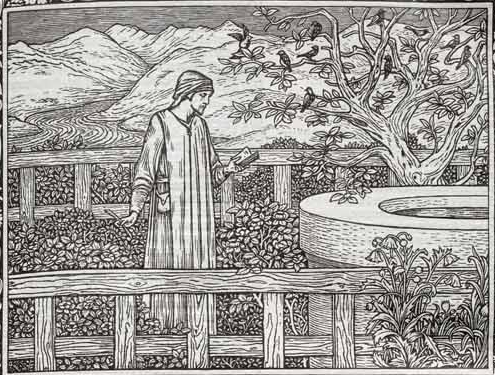
Image from Chaucer's 'The Works Now Newly Printed' from 1896
Screenshot from Chaucer’s “The Works Now Newly Imprinted – 1896”

.hack// Another Birth Vol. 3

.hack// Another Birth Vol. 3It got unbearably hot in the office today so I sought shelter in a much cooler part of the apartment and finished off .hack// Another Birth Vol. 3. These things read like the wind…you pick them up and suddenly you’re half-way through the book.

Things are starting to heat up for the (presumably) grand finale in Vol 4. An uneasy coalition between hackers, admins and players has formed in order to find out exactly what is happening in The World. BlackRose is finally starting to open up to her friends a bit. There’s this common theme I’ve noticed in anime, and now in this manga-ish novel, where characters are always very closed to each other. I’m wondering if that is a typical Japanese behavior. No one wants to burden their friends by letting on that not everything is wonderful in their world. So while Akira/BlackRose is playing in The World in an attempt to save her little brother from a coma, she carries on (well, until now) as if she hasn’t a care in the world. It seemed that even if keeping quiet meant putting friends at risk, she would hold her tongue. It’s good to see her finally opening up; it was getting a bit dull watching her constantly stop a conversation for fear of giving something away.

It’ll be good to get past this series. I have so much else I should be reading and I keep picking these up. Life has been rather a bit stressful lately and I think these silly novels are my way of escaping. I suppose it beats swillin’ beers and Jameson, eh?

.hack// Another Birth Vol. 2

.hack// Another Birth Vol. 2Volume 2 down. Two more to go.

I don’t have a lot to say, though. .hack// Another Birth Vol. 2 continues BlackRose and Kite’s adventures in The World as they try to figure out what’s happening. More and more of The World is becoming corrupt (in the data sense, not in the political sense!) and, often accompanied by bubbly healer Mistral, they keep fighting ‘data bugs’ and trying to get to the bottom of things.

It’s unclear to me why they’re doing what they are doing. BlackRose and Kite each know someone who is in a coma from playing The World, but how fighting these ‘data bugs’ is supposed to help cure their friends, I’m not following. And things have gotten worse…now the system administrators are involved.

Fair warning… Vol. 2 has a “….to be continued” ending, so if you like Vol 1 enough to press on, make sure you have Vol 3 at hand before you start in on Vol 2!

.hack// Another Birth Vol. 1

.hack Another Birth Vol 1And the binge continues…

.hack// Another Birth starts a new storyline in the .Hack universe. This time, it’s the same story told in the .Hack games for the PS2, only told from the point of view of (game) secondary character BlackRose. In PS2 land, the story spanned 4 games, and this is Vol 1 of 4, so I’m assuming each book will cover the events of a different game. I did play through the first game but never finished #2. From what I recall of the story, the book is pretty true to the source material although a lot of side characters have been dropped or are only mentioned in passing.

These books take place a good deal after AI Buster. Orca and Balamung, two minor characters from that story, have become celebs inside The World for being the team that completed the event “The Final Sin.” Now Orca has been attacked and killed in-game by a strange ‘data bug.’ Weirdly, when his avatar fell, the player himself passed out and lapsed into a coma. The same thing has happened to BlackRose’s brother, and she enters The World to find out what is going on and how to help her brother. Kite, the main character from the game and the secondary in this book, is a real-life friend of Orca’s and was with him when the data bug attacked. So he and BlackRose have a common goal.

On the plus side, Another Birth bypasses all the ‘how to play’ stuff that was in AI Buster, so we can get right into the story. However it’s very much a 4-part story and not much is wrapped up at the end of this volume. Also, Akira Hayami (BlackRose’s real name) is a high school student struggling with the jealousy of older girls on her tennis team and other teen-age girl problems that are about as interesting to me as watching paint dry. The tone skews even younger than the earlier books, too. I’m not sure if this is due to the source material or the translation (the book was originally written by a Japanese author) but I suspect its the translation, in the same way so many English anime dubs ‘dumb down’ the content since they figure cartoons are for kids.

And yet…and yet…. I will keep reading the series, and for the life of me I couldn’t tell you why. I think it still goes back to my love of MMOs in theory, and my inability to ever find an MMO that I’m truly comfortable in. Reading these books is like playing an MMO without all the annoying parts, in a way. I’m living vicariously through these characters, I guess. In general terms, though, I don’t think I could recommend this book.