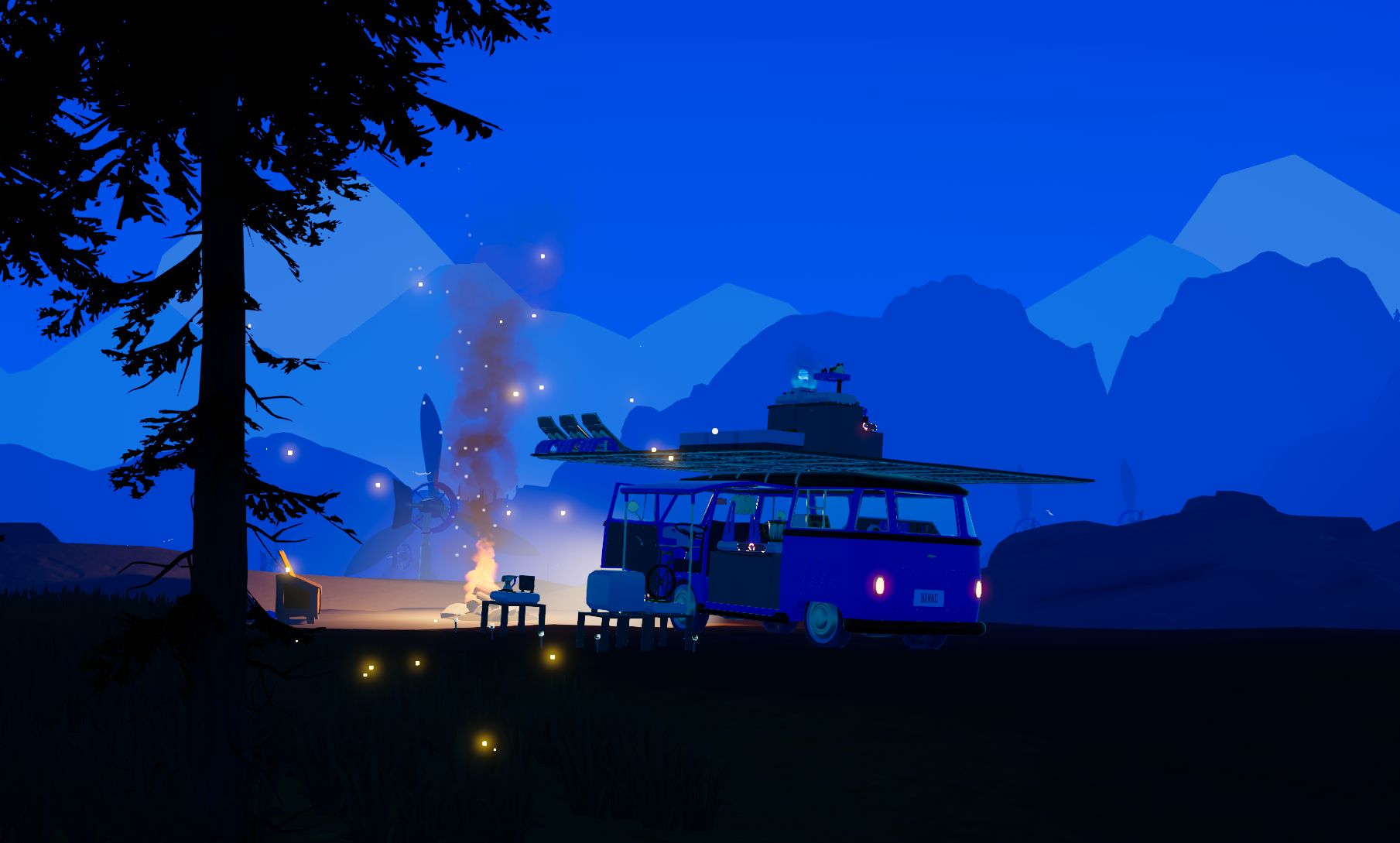
I mentioned over on Mastodon that I was coming to the end of my time with Solarpunk, not because I’m tired of the game but just because I’ve unlocked pretty much everything [I think] other than decorative items and I am not much of a decorator (sadly).
I never even really intended to play Solarpunk. My initial download (it’s on Gamepass) was a result of some jokes about how frequently we’re seeing “punk” added to the end of a word these days. Solarpunk was a lark at first, but then I really got into it.
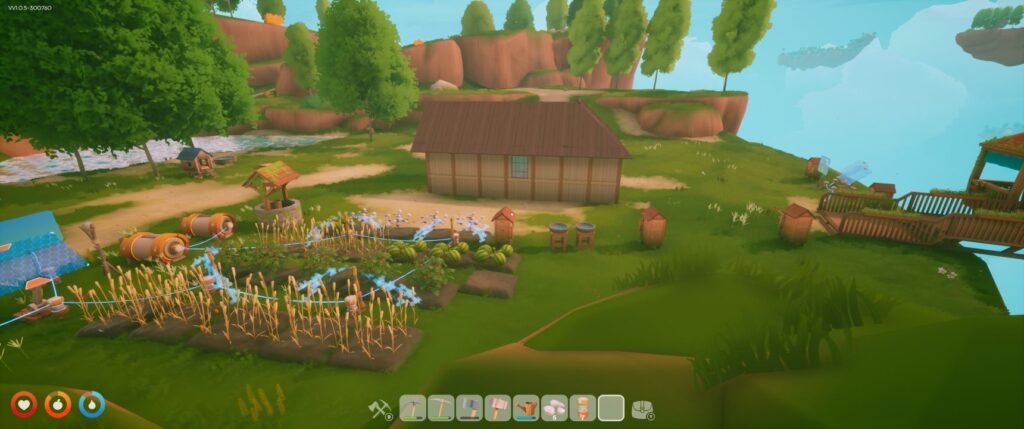
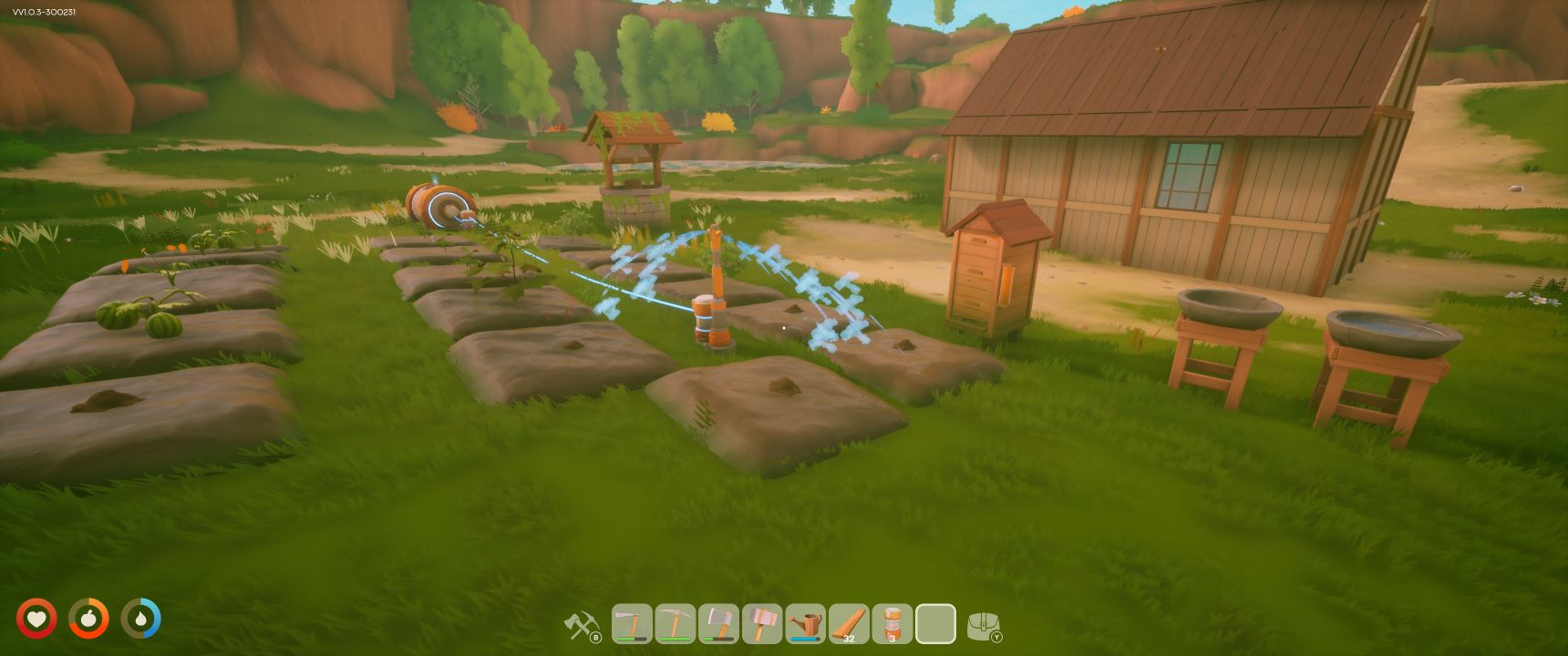
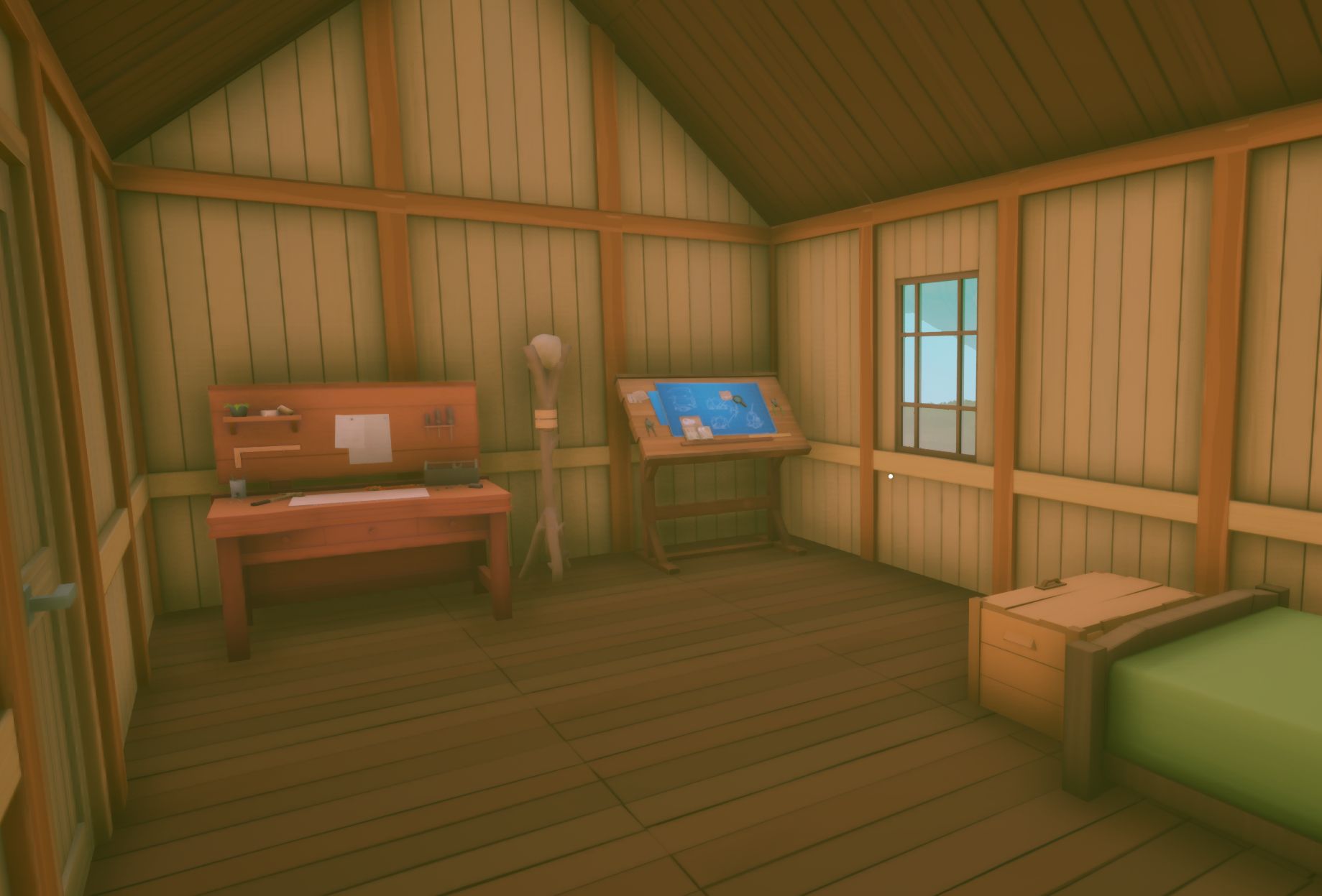
It isn’t that the gameplay itself is all that unique, and there isn’t any kind of story. You gather, you craft simple items. You build workbenches and research stations and then you use the things you crafted to unlock new machines and new recipies for more advanced stuff. There’re some automation aspects, too. It’s all things we’ve done before, this time in a combat-free, and pretty much stress-free, environment.
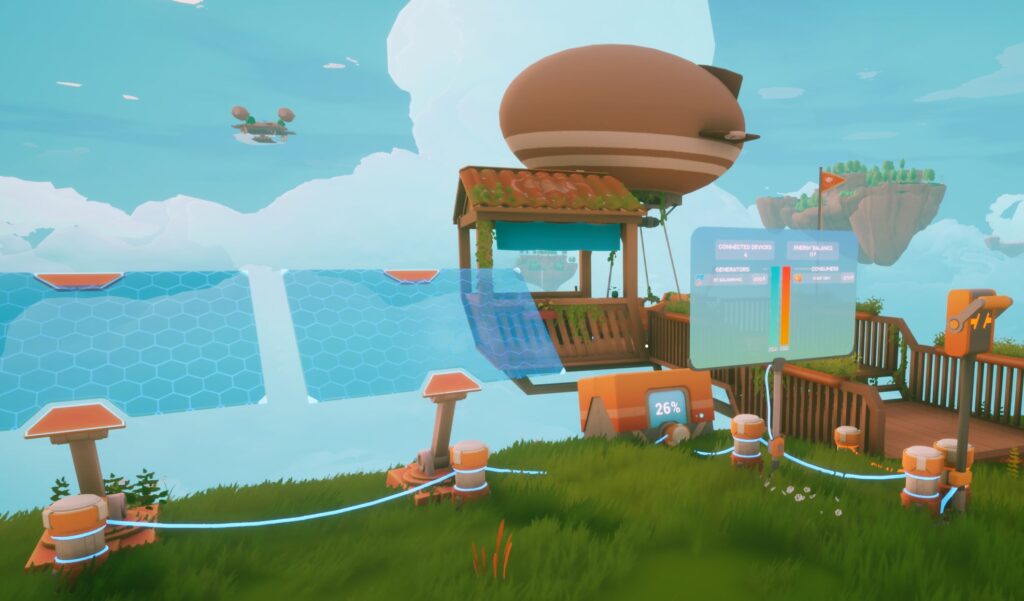
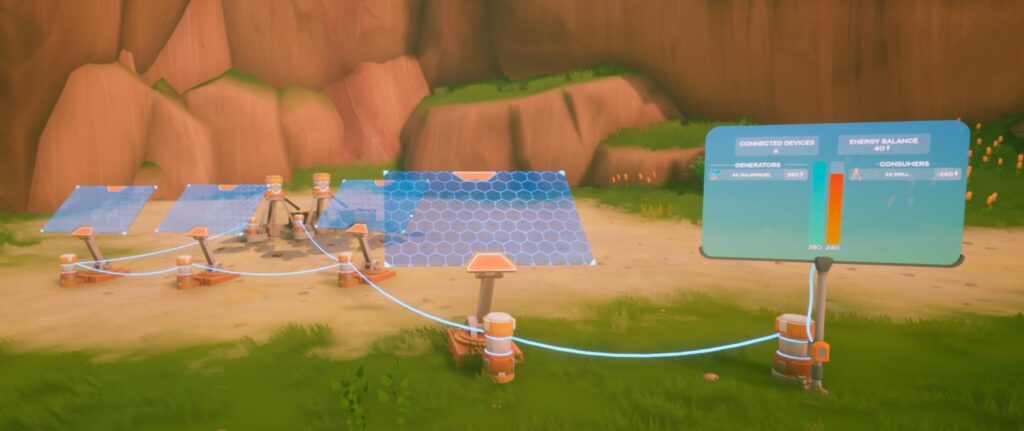
Initially your power source will be burning things. Wood and leaves at first. Then wax bricks made from cloth (which comes from the cotton you’ve been farming) and wax (collected from beehives that you built… the bees show up automagically). Then you’ll unlock solar panels — unsurprising given the name. You’ll research batteries so you can store that juice for night time or rainy days. After that you get windmills and then giant wind turbines which hover well above your island, powering lots of stuff. I was a bit surprised that solar power became somewhat redundant! The wind is pretty constant, day or night.
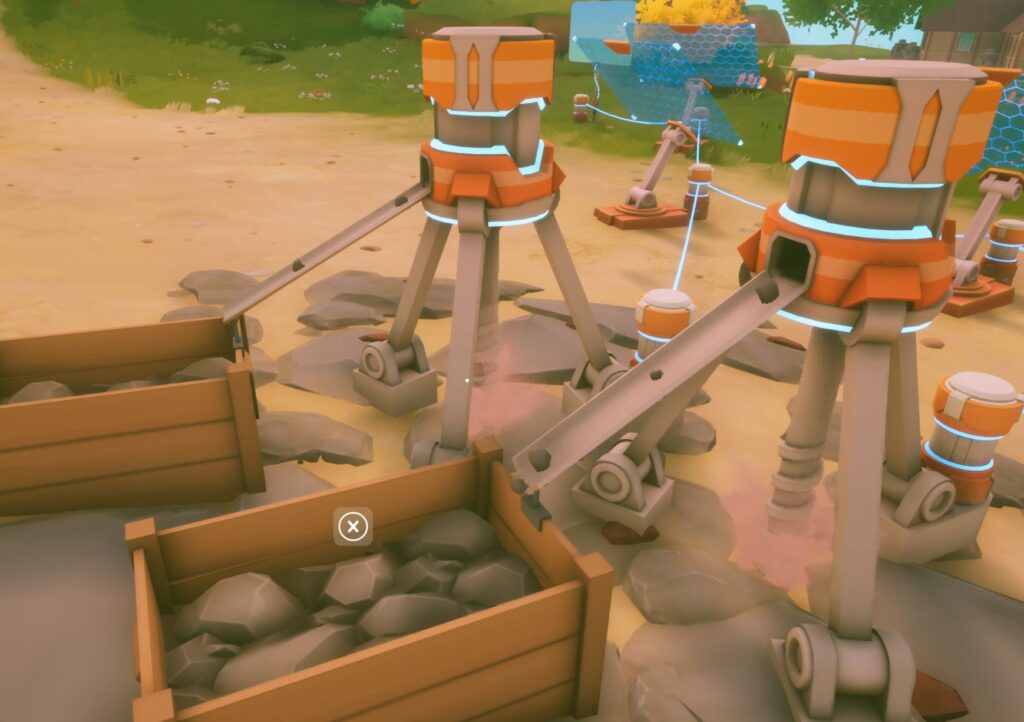
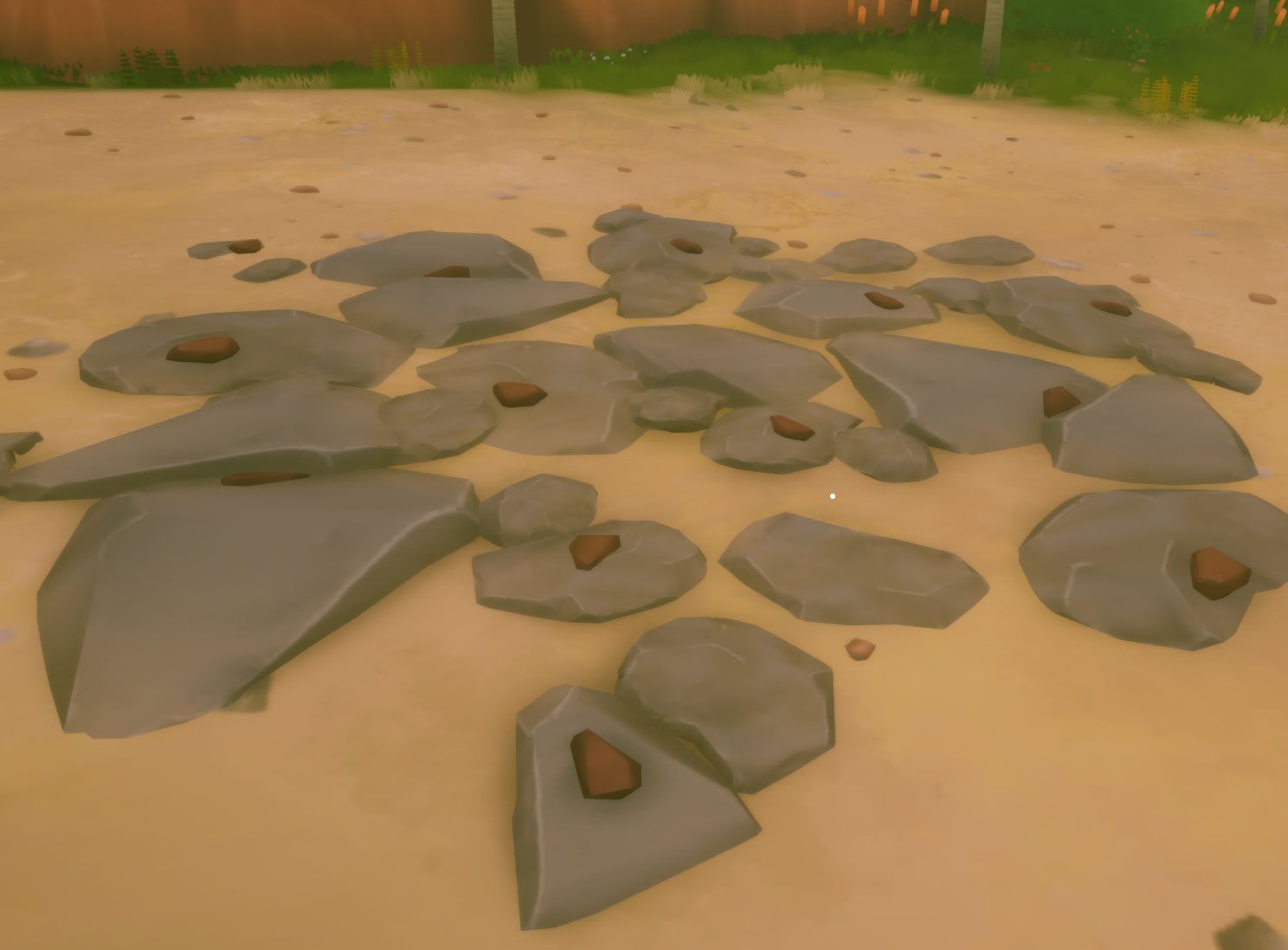
One of the first automations you’ll unlock are drills. You put these on mineral resources that are scattered around the islands. Your first island has iron, a nearby one has copper and so on. The farthest flung islands have diamonds. Drills need power: you can set up a furnace that burns things, but using solar panels or windmills is going to be your ultimate goal.
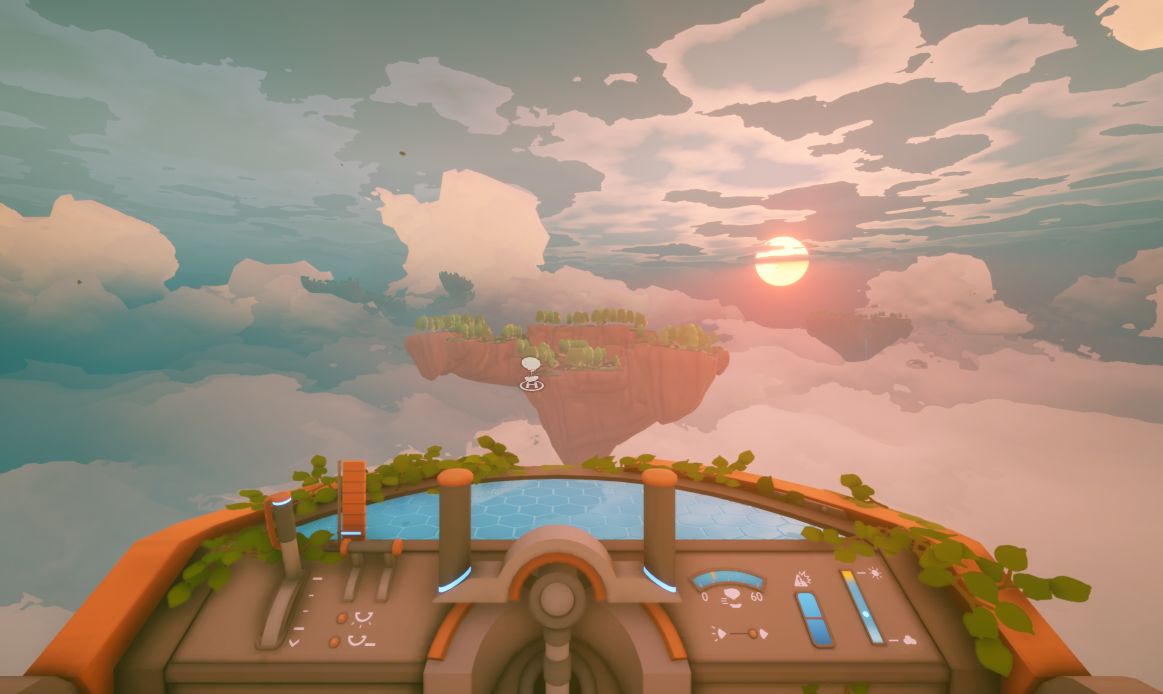
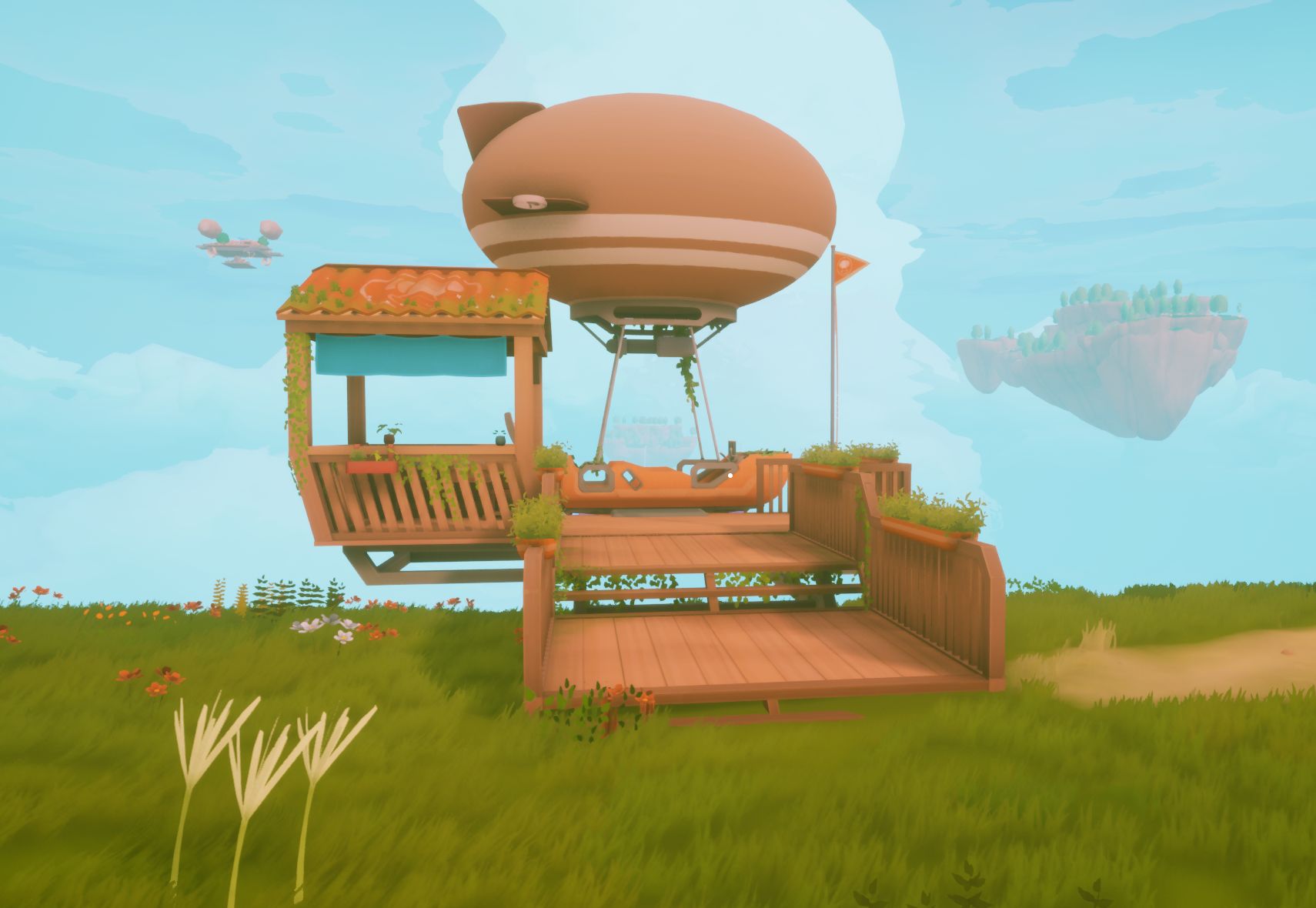
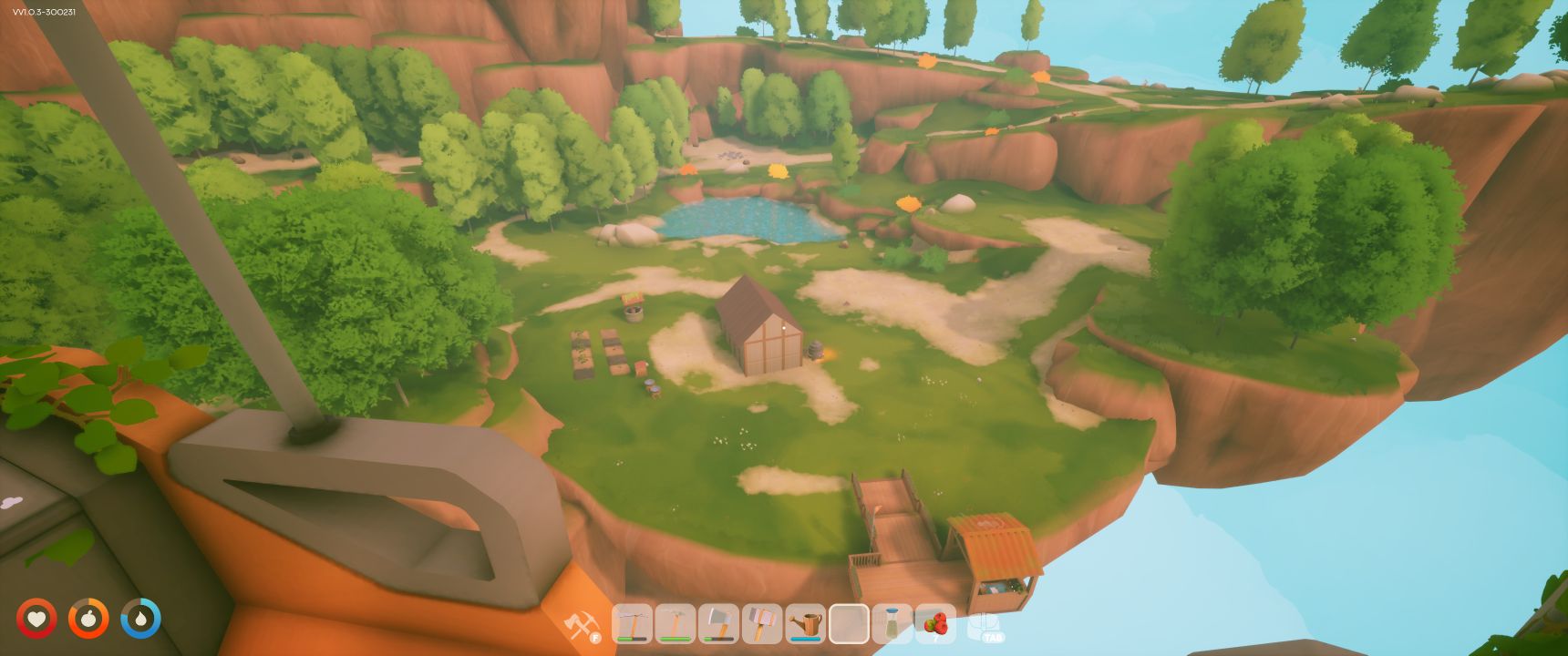
Flying between the islands (which float in the sky) to gather the resources your drills have produced is initially fun, and just about the time it starts to feel a slight bit tedious you’ll unlock drones that will fly off and collect the ore for you. Of course these need power, too!
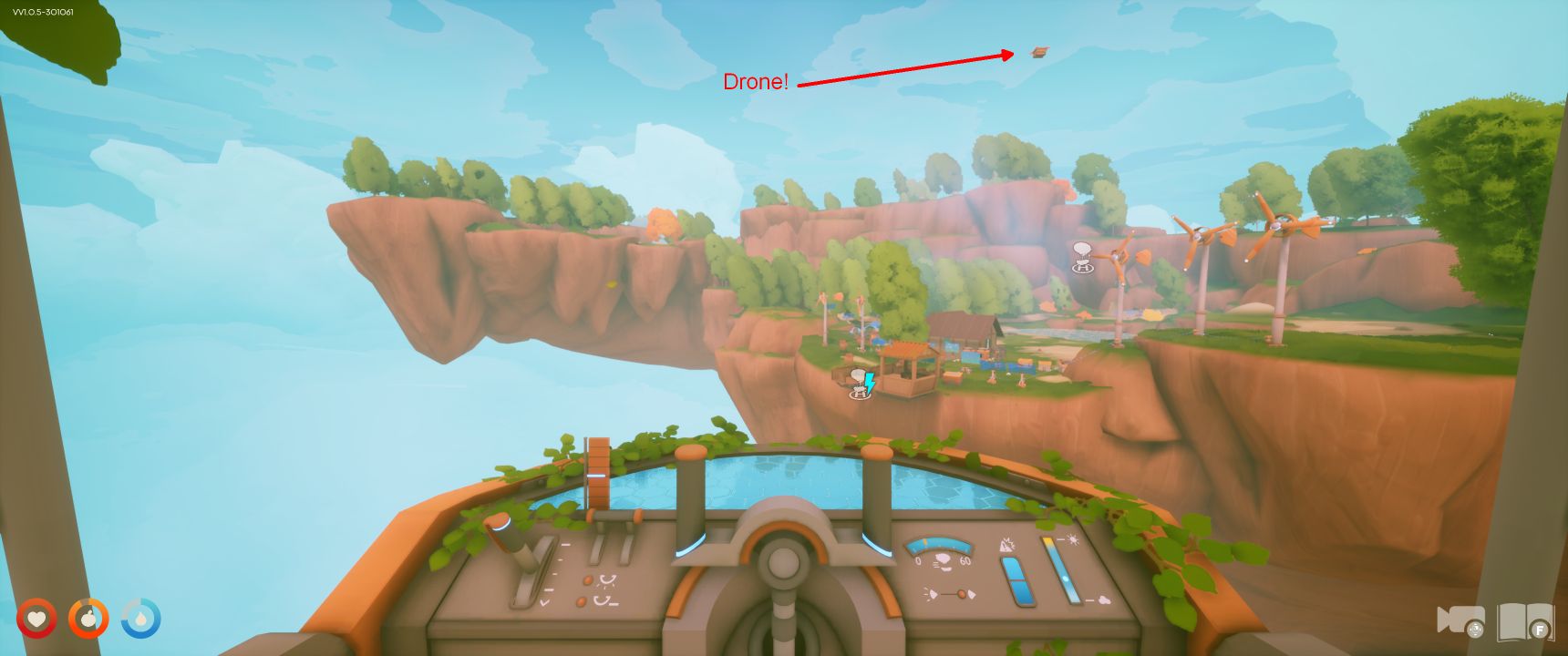
And here’s my first reason for giving the devs a high-five. The drones are physically modeled. You can watch them lift off and then head off towards their destination. I assumed, initially, that once they were out of sight they would despawn, and after some appropriate amount of time they would respawn laden with ore and a variable somewhere would decrement the amount of ore at the drill. But that doesn’t seem to be the case. When you’re out in the airship you can see your drones flying around, and they really are modeled for the entirety of the trip. I’m not sure exactly WHY I’m impressed by this, but I am.
And then there’s the weather. Your one true enemy in this game is storms. They’ll flatten your crops and they can even harm you if you get hit by lighting. The skies grow dark as can be and thick clouds roll in. One of my deaths came when I was trying to get back to my ‘home’ island at the height of a storm. It was so dark visibility was near zero. I was squinting at the screen and suddenly a mountain loomed out of the darkness and I flew dead on into it. Splat.
Before lightning strikes you’ll see electrical arcs forming on the ground, then BAM! The lighting and thunder is loud enough and abrupt enough to actually startle you.
Then as the storm starts to wind down, the clouds break up and you can fly in and out of them… the clouds are also physically modeled. Some are white fluffy things and others are dark and forboding.
The most distant islands are cold. When you are on those and it rains, instead of rain you get snow. OK actually it looks a little more like hail. But considering you’ll only be able to get to these islands near the end game, and that they’re far enough out you won’t probably make any more trips than neccesary for to them, that they added snow for this tiny slice of the gameplay was another thing that impressed me.
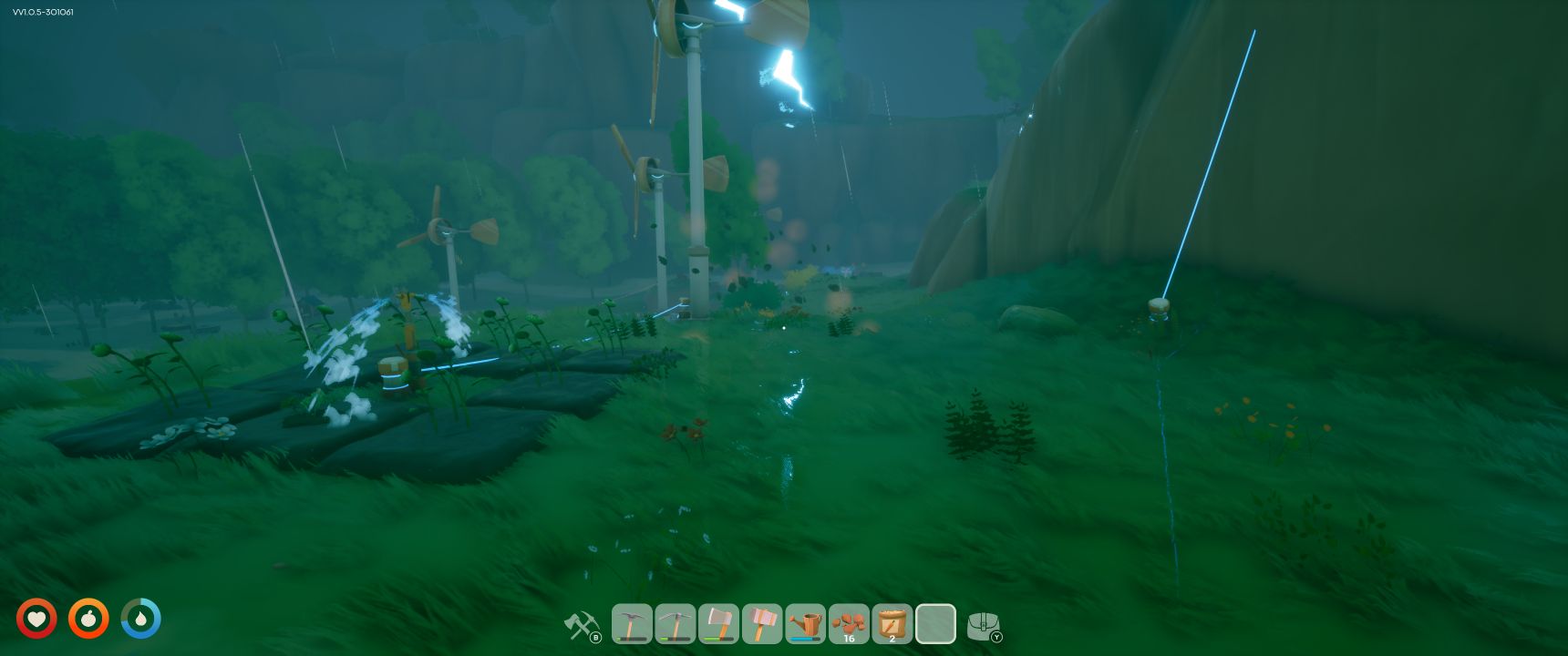
Oh also worth noting that sometimes it just rains, without the storming bit. The wind changes direction too which doesn’t have much of an impact on gameplay, but it does cause all your windmills and wind turbines to rotate accordingly.
There are just all these little details that they really didn’t need to put into the game, but these are also the tiny touches that, for me at least, made it pretty special. I hope there’s a Solarpunk 2, or an expansion or something. All these detailed systems they’ve created need to come back in other forms. I can’t wait to see what they do next.
The only place I felt like the game fell a little short is with the hunger/thirst system. It is super easy to keep these topped up, and yet there’s a whole cooking system where you can make better and better foods. It’s nice for immersion but I basically lived on watermelons for most of the game.
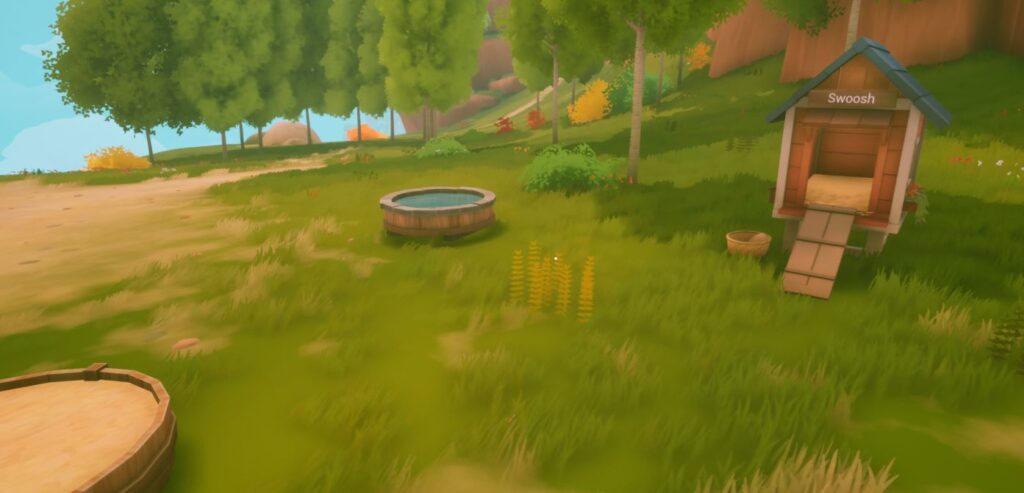
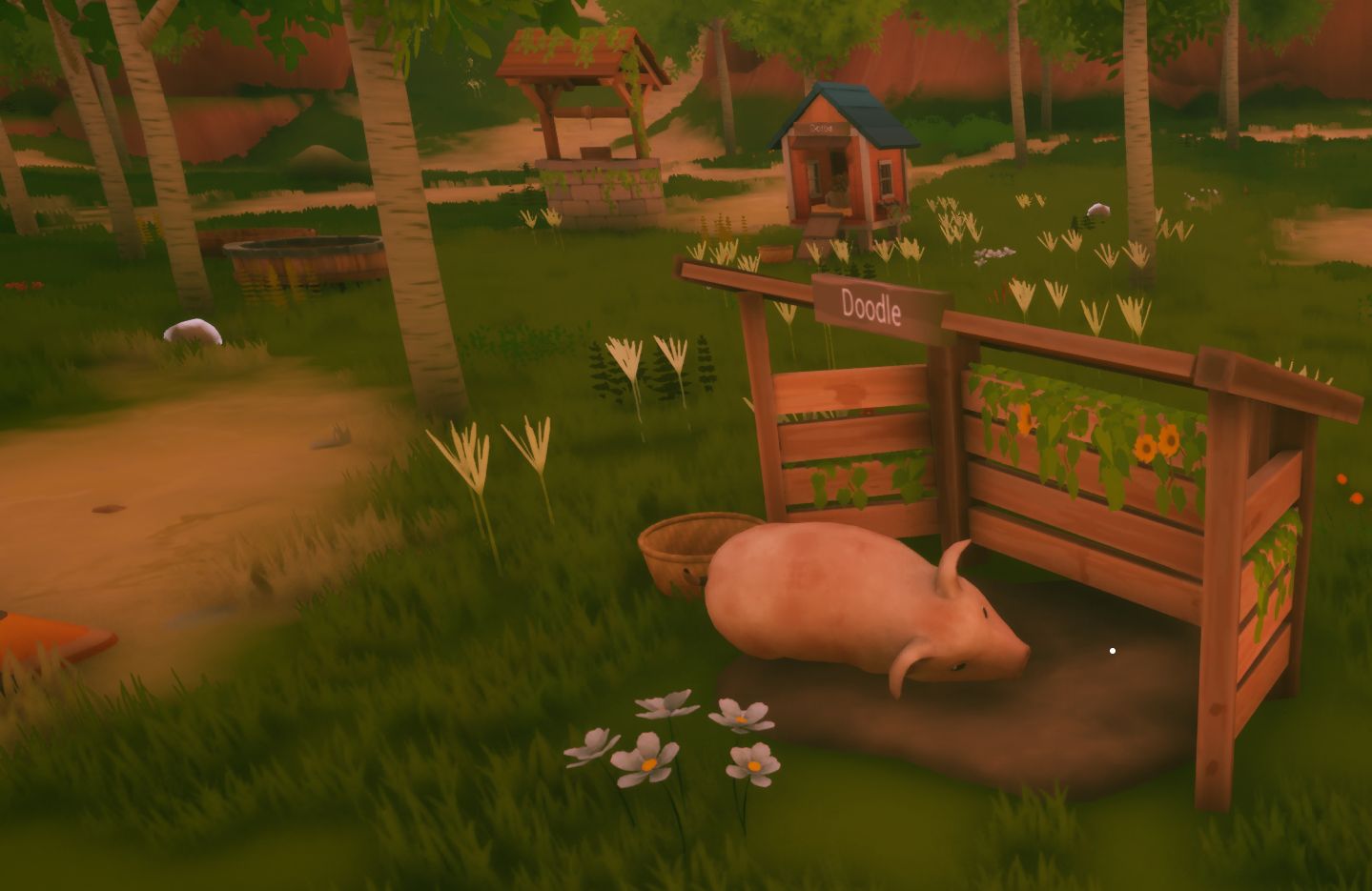
Oh, there’re also farm animals: chickens give eggs, sheep give sheep’s milk and pigs give…. truffles. Whew, I don’t have to turn Doodle, my pig friend, into bacon. These animals add add more infrastructure: they need shelters built as well as to be fed and watered (eventually you can automate this). Oh, and transport. You don’t want to have to fly from island to island just to give your animals food and water, so there’s a system to fly them between islands. But you have to research and build it!
The most amazing part of all this is that apparently Cyberwave, the development studio, is apparently a 2-person studio (though they used another team to do ports.. the game is on everything from Steam to Switch). Here’s a YouTube video about the team and the game:
Sometimes a game comes along and just grabs you. And sometimes you feel like it’s only you! On Steam Solarpunk has a very positive rating but only around 1,600 reviews, which seems low. It’s not an expensive game ($22.99 on Steam with no sale running) and my first playthrough is sitting at around 30 hours with maybe a couple more to go.