Dragonchasers
Posts Tagged ‘psp’
Posted on October 2nd, 2009 at 12:48 pm under Gaming

The launch of the PSPGo meant a deluge of new content on the Playstation Store for PSP owners, so last night I spent some time poking around to see what was available. One of the demos I found was for Tecmo’s Undead Knights, a game that feels like a cross between a Dynasty Warrior style brawler and Overlord.

This being a demo, I don’t really know who you are or what your motivation is. I just knew I was here and the game wanted me to go there. And I had a really big sword. And I could turn enemies into zombies. And the odds were against me. So I waded in swinging.

When you get near an enemy in Undead Knights, you can hit the Circle button to grab them by the throat and convert them into a zombie. As soon as you grab them, a circular gauge starts filling. Once it fills, the enemy is converted. If you get clobbered during the process you’ll drop your foe and have to start over again. However, if you give the opponent a solid whack with your sword first, he’ll blink red. While blinking you can insta-convert him.

Left to their own devices, zombies generally act like zombies, stumbling around attacking anything that comes close. But you can grab a zombie and hold him up to use as a shield, or you can grab one and throw it at an enemy, which will cause that zombie to attack the enemy you threw it at. Early in the demo you’re faced with a big ogre thing, and to bring it down you have to throw a bunch of zombies at it. They’ll crawl all over the creature and eventually will bring it to its knees, at which time you charge in and deliver the coup de grace with your sword.

You can also ‘point’ at an object and direct your zombie horde to interact with it. This works almost exactly like Overlord. There’ll be a gate that needs tearing down, so you face it, hit the right shoulder button and cry DESTROY THAT! and your zombies will charge it. You’ll see a counter showing how many are attacking the object vs how many you need to have on it to destroy it. If you don’t get enough zombie-power on there quickly enough, they’ll all fall off, take damage, and you’ll be back at square 1. It can take your zombies some time to stop what they’re doing and shamble over to the target, during which time you might be attacked and have to stop giving orders. Which again, means the zombies fall off, taking damage, and the obstacle remains in place. At one point in the demo you even have the zombies form an un-living bridge for you to run across!

If it sounds like un-life is hard on a zombie, you’re correct. They take a real beating and don’t last very long, so you’ll constantly have to refresh your supply (tip: when a zombie is missing his head he doesn’t have too much more time left). Luckily enemy foot soldiers seem virtually endless, and they’re easy to take down and zombie-fy. More skilled enemies are more rare, harder to kill, and harder to zombie-fy (but when you do, they seem to be identical to the grunt zombies, so it makes no sense to go to the extra effort of zombifying your tougher opponents).

I had a lot of fun for the duration of the demo and if you have a PSP (and don’t mind gory zombie combat) I suggest you check it out. Frankly it isn’t a game I’m going to run out to buy right now at full price, not with all the AAA titles coming in the next couple of weeks. But it’s one I’ll put on my watch list to pick up on sale during the next gaming drought.

Here’s a gameplay video a snagged off of YouTube. Not created by me but it gives a good sample of almost everything I just mentioned, if you watch carefully:

Posted on March 29th, 2009 at 10:27 pm under Gaming

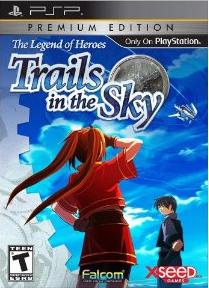
Doing a review for a game you loved is easy. Doing a review for a game you hated is easy, too. Reviewing Star Ocean: First Departure, for the PSP, isn’t going to be easy. For the first 10-12 hours I was playing it, I was considering quitting; it just wasn’t grabbing me. Then I started digging into some of the ‘extras’ and treating it almost like an MMO, my focus turned to building strong characters efficiently rather than driving the storyline forward, and then I was really enjoying it. But that could only carry me so far, and when the game finally ended I was both satisfied *and* relieved.

So let’s break it down a bit. This is a pretty typical linear JRPG. There are some side quests but mostly it’s a straight shot from unknown farm boy to hero of the world. And honestly the story was pretty average. It started interesting, with some time travel and the ultimate goal being to cure a disease; surely a noble cause. But really that boiled down to having to kill Foozle, and in order to kill him you first needed to find the 4 Widgets of Wonder to access him. It at least made sense, and if you pay attention there’re ties into real world legends and so forth, but it just didn’t really draw me in, and the only real ‘twist’ felt like something stuck in to bloat the length.

As for characters, you have a core of 4 characters plus 4 open slots to fill with extra characters. There are more than 4 of these so if you want to play them all you’ll have to play through the game at least twice. Only 4 of your characters are active in combat at any time. You can swap them out at will. When I was enjoying character building I was trying to keep everyone an even level, but when I started my drive to finish, I picked 4 characters and relied on them alone. At the end of my play through, my ‘core’ characters were level 72 and my extras were still in their 40s.

Combat is action based, which would be fine except the camera (which you can’t control) is usually too low. When you have a bunch of baddies and 4 of your characters on screen, it can be really hard to figure out what’s going on, and I spent a lot of the game button mashing my way through. You can change which character you control by tapping the circle button, which pauses combat, then the “D-pad” lets you cycle to whomever you want to control. Pressing Triangle pauses and opens a menu for using Items, Fleeing battle, and so on. Pressing the Square pauses and lets you change your target.

And that’s cumbersome: that you have to pause and cycle around to get the target you want rather than just running up to it. Combat also pauses when big spells go off in a classic Square Enix style of flashiness that you’ll get *incredibly* sick of by the end of the game.

The three characters you aren’t controlling are AI powered. I spent 99% of the time running the ‘main character’ and letting the AI do the rest of the work, and it does an admirable job. The healer in particular was great at healing just enough, just in time. She also knew to run away when she got aggro. My mage was ok, but was prone to unleashing a big, slow attack when the battle was almost done, which just wasted mana and slowed things down. Still, the AI was pretty good; no complaints there.

It took me 25 hours to play through the game, and as mentioned, by characters were in their low 70’s. You level *frequently* in Star Ocean: First Departure, and when you do you get skill points to spend. Skills are used both to build up ‘crafting jobs’ like alchemy or blacksmithing, and (for some of them) to add to your stats. So Smithing adds to strength plus is required for the Blacksmithing ‘job’ (which is actually called Compounding). There are also combat oriented skills like fast spell casting or defense breaking. So there’s a lot of decision making about who is going to do what job, and what percentage of skill points are going into combat vs crafting. With the right materials, a character can write a book about one of his skills and pass it to another character to read in order for them to raise that skill without spending points.

To make a finely honed party you really need to plan this stuff out. There’s no reason to have, say, two alchemists. However Compounding only works on the weapons you can use. (Generally you combine a weapon and a mineral and hopefully get a better weapon, but you might end up with junk.)

The crafting system is pretty deep and pretty interesting and was my favorite part of the game. (There’s a music system, some kind of art system, systems that require the whole party to join together to work on a project..lots of stuff.) That said, I’m told the game has a level cap of 250 (!) and a hitpoint cap of 9999 (my dudes had 5000-6000 HP by the end) so if you’d rather grind levels then mess with Crafting you probably could do so.

Sometimes it’s hard to avoid grinding levels due to random encounters. You know that old school vibe…walk for 3 seconds, have a combat encounter. Walk another 3 seconds, have another. There’s a skill called Scouting which is supposed to help you avoid random encounters (or, heaven forbid, get more of them) but I didn’t have much luck with it.

The Save System is a little annoying. You can save anything on the world map, and here and there in dungeons. You can’t save in towns, not even at Inns (where you can sleep to regain HP and Mana). That meant a lot of time running out of town to save before trying something crazy.

All in all, I’d give Star Ocean: First Departure about a 3 on a scale of 1-5, but it is definitely a game only for fans of JRPGs. I ended up higher level than most, from what I’ve read on gamefaqs, and I’m not really sure how or why, but because I did the game was never very difficult. There were lots of parts of the Crafting system I never really had use for, and I rather wish I would’ve been ‘forced’ to either use them or deliberately grind levels. I do like that the “I’m going to grind until I’m uber and can mop the floor with the bosses” option is there for those who enjoy playing like that, but I think you should have to deliberately attack the game in that fashion for it to work. That I ended up over-powered “by accident” indicates a bit of a balance problem, IMO.

There’re apparently multiple endings depending on how well your party got along (there are certain opportunities for ’special events’ in most towns that’ll help there) and there’s a post-game dungeon in case you want to keep leveling, but for me, one time through the world of Star Ocean: First Departure was plenty.

Posted on February 10th, 2009 at 1:30 pm under Gaming

Let’s face it, the Sony PSP doesn’t get a lot of love out there in the blogosphere. And there are excellent reasons for this: game selection is fairly thin, having only one analog stick makes for some wonky controls, battery life could be better and it really isn’t quite as portable as a handheld should be.

But I still love mine. I just forget that I love it for long periods of time. Then I fire it up and swoon all over again. I forget how awesome the screen is, how light it is (mine is a PSP-2000) and how many cool things it can do besides play games. But most of all, I forget about its Suspend function.

As I mentioned in my last post, gaming time during the week has become very rare. Last night, it was after 11:30 by the time I felt like I’d done “enough” and could do some gaming. So already it was really past my reasonable bedtime, but the itch to game was strong. I figured I could play for 15 minutes and get away with it. That totally ruled out any MMO, of course. And for that matter, anything on the PS3 or 360. By the time I turned everything on and got settled, it’d be time to quit. Nothing I had on the PC really was fine-grained enough to offer 15 minutes of satisfying gameplay.

Then I remembered the PSP. And it isn’t that the games on it are satisfying in 15 minute chunks either, but it’s the fact that I can just hit the Suspend button at any point, and come back to it later, pretty much instantly. So I restarted Final Fantasy: Crisis Core based on the fact that a Twitter pal had just finished and really enjoyed it, plus I’d recently read an interesting article (Opinion: Crisis Core’s Quiet Redefining Of The Gameplay Narrative Divide) about it at Gamasutra.

I didn’t get very far before my 15 minutes were up; the opening FMV intro and the first training battle. And then, right in the middle of a dialog, I hit Suspend. And I know tonight if I have 15 minutes to play games, I’ll spend 14:40 of it actually playing the game, since it’ll take no more than 10 seconds to unsuspend and resuspend the title. Getting in and out of a suspended game is faster, even, than loading and saving a DS game (though granted, that’s pretty fast too, and I also love my DS).

I realize that to some extent, lauding the Suspend function of the PSP is damning with faint praise. But so be it. Last night, I was *really* happy that I’d invested in the PSP. And I suspect I will be again tonight.

Posted on August 21st, 2008 at 12:34 pm under Gaming

While the Great BlogWAR of Aught-8 was raging, the Leipzeig Game Conference was ignored here at Dragonchasers. Shame on me.

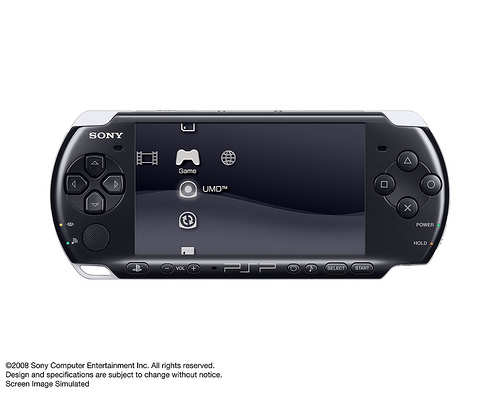
A couple Playstation-related hardware announcements cropped up. First is the PSP-3000, another rev of the familiar PSP, this one with a built-in microphone (for Skype or voice chat in games) and a screen that is supposed to have double the refresh rate of the old screen, a “color gamut” twice as wide (honestly not sure exactly what that means but I figure it boils down to twice as many potential colors) and 5 times the contrast ratio. Also the Home button is gone, replaced my a Playstation button.

An incremental improvement, for sure, but still welcomed.

Also, a new PS3 bundle. 160 gig PS2, Uncharted: Drake’s Fortune, DualShock Controller and a coupon for PSN game Pain, all for $500. Uncharted is pretty f’ing great, so its a nice pack-in choice. The downside is that, from everything I’ve read, this new 160 gig PS3 has no Backwards Compatibility. So presumably the MGS4 80 gig bundle now on store shelves is your last chance to get limited BC.

PSP-3000

 Comments Off